The Swiss edelweiss: from alpine myth to cosmetic reality
“Mom, the teacher told us that if we see an edelweiss in nature we are not allowed to pick it. Did you know?”
It was this phrase from my daughter coming home from school the other day that inspired me for this blog article.
I would like to shed light on this symbol of the Swiss peaks that fascinates everywhere in the world and which unfortunately is too often used for marketing purposes (not to say to deceive the consumer).
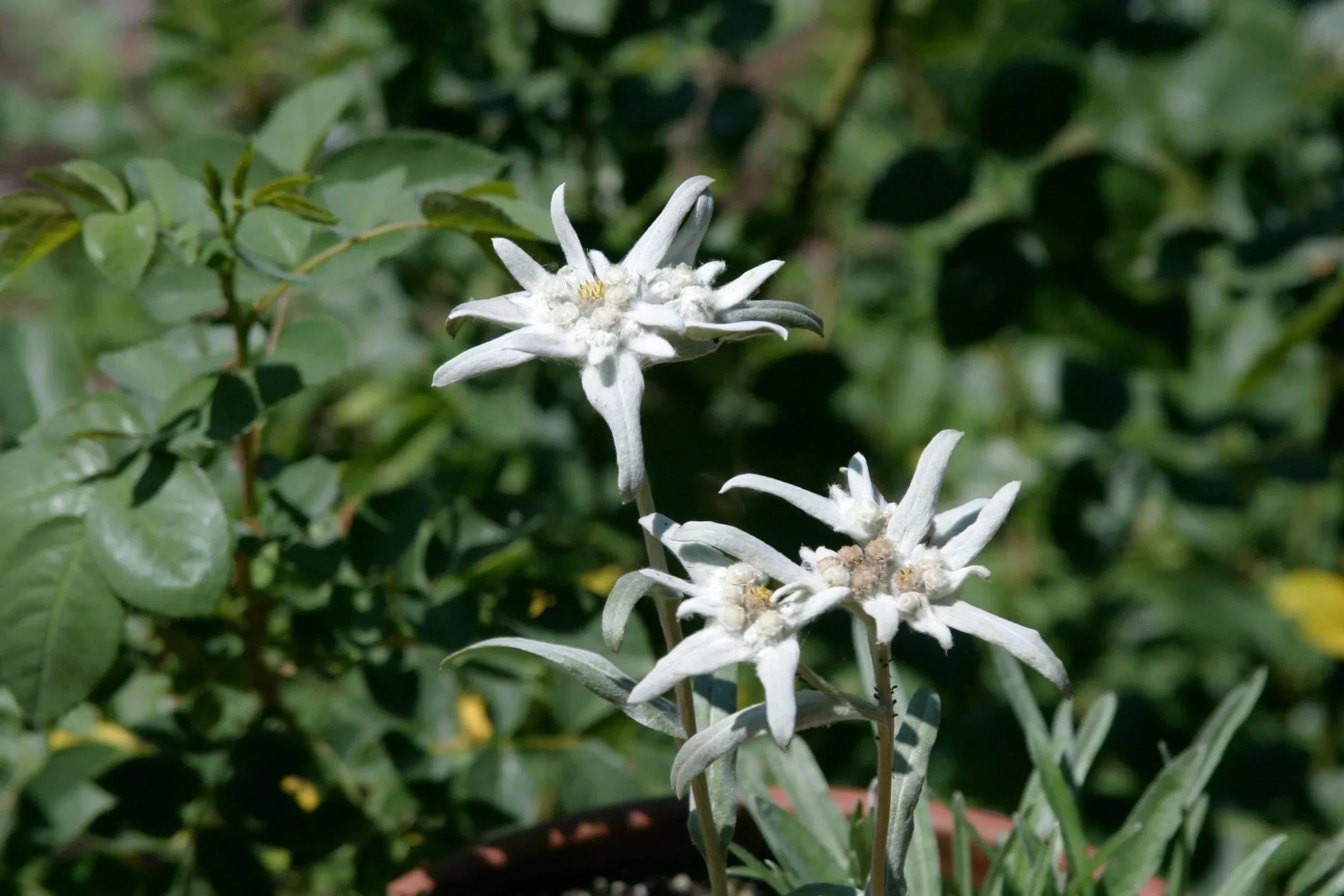
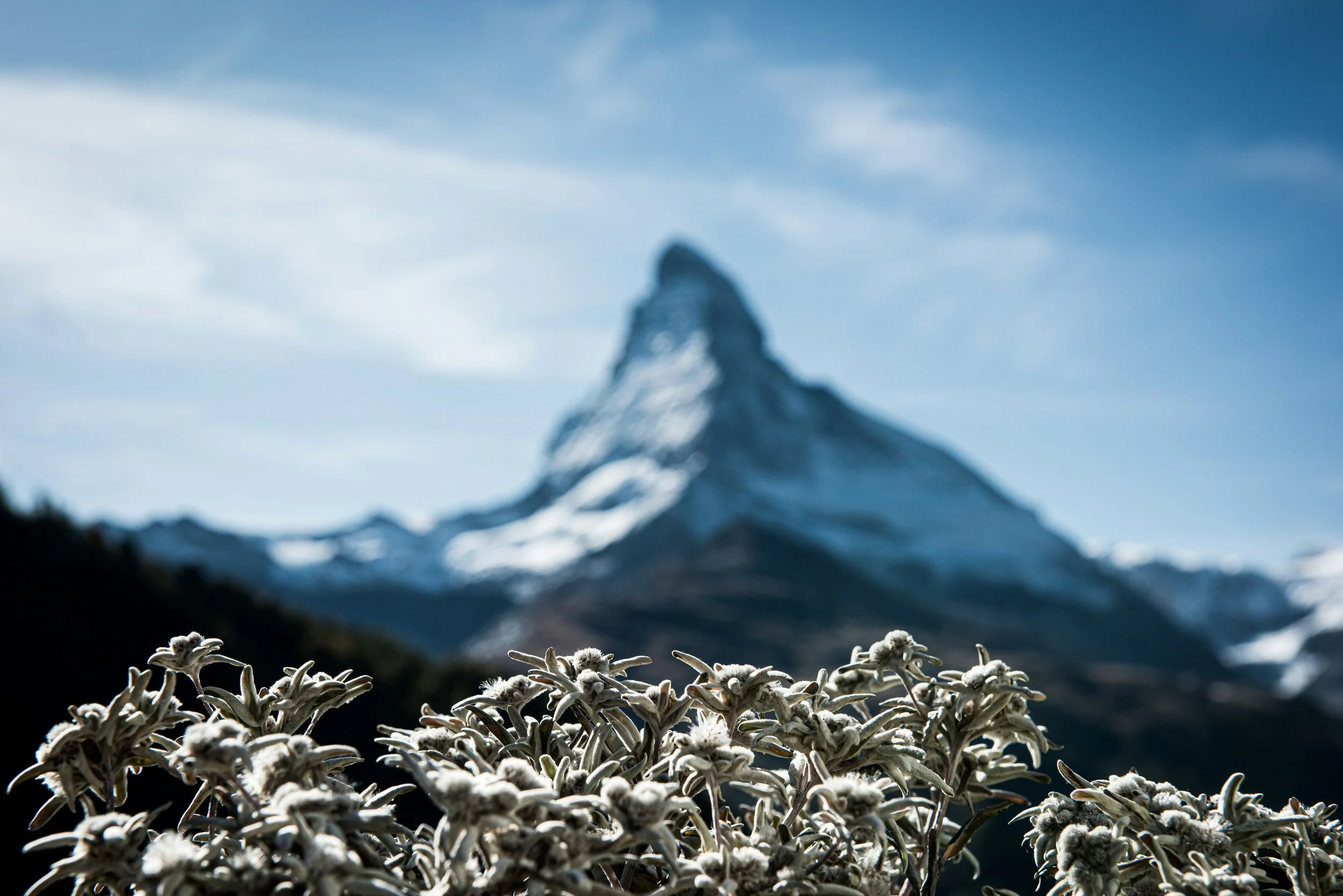
This mythical flower of the Alps embodies purity, rarity, and in the collective imagination, it only grows at the top of mountains, where only the most daring dare to venture.
But at the risk of disappointing you, the edelweiss whose precious extract is contained in your cosmetics was not picked by a druid with his sickle (hello Panoramix), with a small jute bag on his back at the top of the Matterhorn.
In reality, this star-shaped flower is much less wild than one might think, especially when it comes to making it available to the cosmetic industry.
To do this, let's talk a bit about botany.
A floral icon under high protection
Edelweiss (Leontopodium alpinum) is a protected species in many alpine countries, including Switzerland. Its collection in the wild is strictly regulated, even prohibited.
This protection has been put in place to preserve the natural populations of this fragile flower, once threatened by over-harvesting for tourism and botany.
From the mountain to the cream: a path more agricultural than alpine
The paradox is that there is a strong enthusiasm among cosmetic brands for edelweiss.
It allows for exporting a bit of "Swiss purity" abroad and increases the final price of products, capitalizing on the rarity of this flower.
In fact, this flower is now ubiquitous in anti-aging creams, serums, including in baby care products where it is praised for its antioxidant and protective properties.
However, the edelweiss that goes into the composition of these products does not come from inaccessible high altitudes, but from intensive cultivation fields, often in lowland or mid-mountain areas.
The edelweiss is cultivated on a large scale, just like sunflowers or lavender under controlled conditions, for industrial purposes.
This cultivation allows, as explained above, to meet market demand without threatening wild populations. Ethically and environmentally, this is more desirable; however, it breaks the myth of the rare and inaccessible flower. Sorry…
Marketing plays on the image, not on the origin
So, how can we try to embellish this well-established cultivation?
Cosmetic brands thus capitalize on the romantic image of the edelweiss: a rare alpine flower that emerges from the eternal snows.
Few consumers know that the edelweiss in their cream jar grew in well-maintained fields, sometimes just a few meters from a highway, far from the dizzying peaks.
That is why it seemed important to me to talk about this dissonance between image and reality because it raises a broader question about the marketing of nature: how far can we play on the imagination without misleading? Does the authenticity of a product lie in its composition or in the story we tell around it?
Transparency and respect
The idea is not to discredit the edelweiss and call for its use to stop. Not at all. Even when cultivated, the edelweiss remains a plant with interesting properties and a natural ingredient.
But it is essential that consumers are informed about the origin of an ingredient which ultimately here for the edelweiss has a more down-to-earth reality.
At Eliott&Eloée, we believe it is the duty of brands to inform consumers about the real origins of ingredients, whether they are synthetic or natural. And to promote more transparency around their sourcing.
Maybe in the future you will see a cream, a shower gel that contains it in a different light?